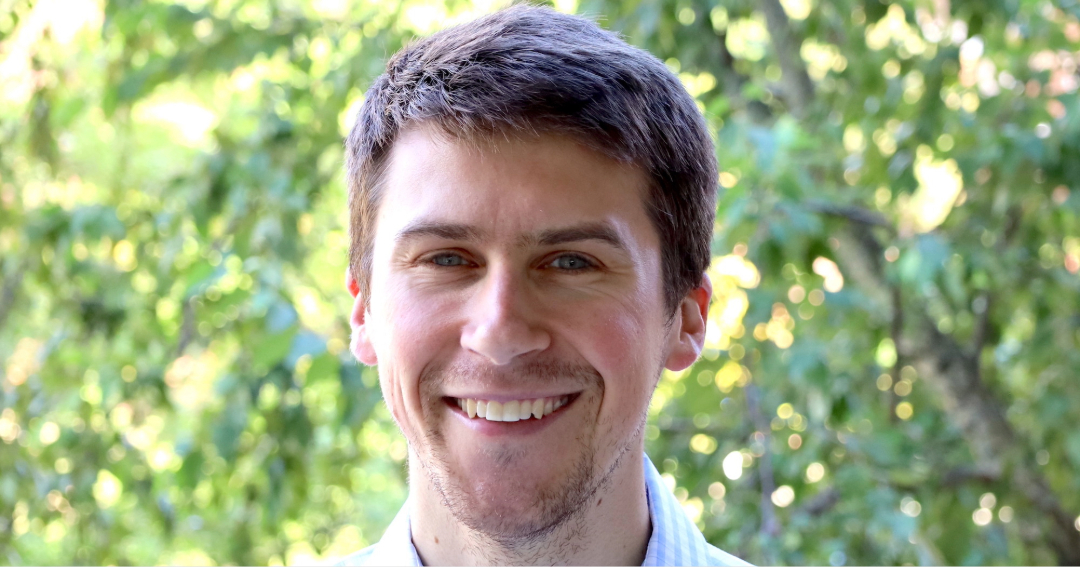
Emily Gordon

Current Position:
Senior IT Program Manager at SAS
Degree (s):
- Bachelor of Science in Applied Mathematics, minors in French and Physics, NC State, May 2009
- Master in Global Innovation Manager, NC State, 2010
Questions below were answered by Emily, while she was in her previous position as an IT Project Manager at SAS Institute Inc.
Was the degree you earned required for the work you do? How did you find yourself in your current position?
The answer to this question is most definitely less, and I would say my degree in mathematics is required for 2 large areas of work I touch on daily- complex problem solving and project control and reporting.
First, I’ll touch on complex problem solving, which is the core of my undergraduate degree from NC State. NC State College of Sciences trained me to become a creative, efficient solver of complex problems. I encounter a wide array of complex problems every day at work. My degree gave me the knowledge of different methods for approaching problem solving and I continue to learn more methods and more solutions as I have more experiences. My degree also gave me the confidence that I can solve complex problems. This confidence is really vital as someone who works in the technology industry which is constantly changing and creative new problems but also new tools for solutions all the time. The confidence I built as I was able to master calculous, real analysis, complex analysis, and modern, linear or abstract algebra really did create a foundation for my job because I believe the problems I encounter at work are possible to solve. And not only are they possible to solve, but I am confident that the teams I work with can find creative, simple, efficient ways of solving these problems. This confidence continues to build with experience in the work place of course but the foundation I had from my time at NC State gave me foundation that allowed me to take risks earlier in my career and take opportunities that allowed me to take on more responsibility and more strategic projects.
In the second area of project controlling and reporting I will say it’s a rare day that I use calculus 3 at work but I do often use data analysis and statistics based calculations in my job to report on project metrics so that I have a quantitative way to track projects. In my role I have to keep track of all the different variables at play on a given project so that I can report on our progress and assess how the team is tracking towards our goals in terms of deliverables, time, cost, and quality. Especially if we encounter a change or a significant risk I use concepts I learned studying mathematics to develop the different possible outcomes and scenarios and the impacts each scenario would have on our different project variables. I use these figures to help management make important project and business decisions.
What skills or abilities do you find are most important in the work you do?
In my answer to the previous question I touched on how the ability the creatively and efficiently solve complex problems is a key skill for my job.
Another key skillset for my job is communication. In project management, I do a lot of managing expectations of project stakeholders and managing the people on the project team. This requires many communication skills. To name just a few I need the communication skills to:
- Communicate highly technical information in concise more layman’s terms for project stakeholders.
- Communicate project achievements, risks, dependencies, and status is clear concise terms.
- Communicate information about proposed solutions, project roles and responsibilities, project meetings, to the wide array of team members on the project in a way everyone clearly understands.
- Communicate risks and harsh truths when projects are off track in clear, concise ways that management can make quick decisions and act on.
Another skillset I use often in my job is leadership. As someone who is managing a cross-functional project but does not usually have staff reporting to me in terms of organizational structure leadership skills are very important because that is where I draw my authority and respect from the project team from. I need the leadership skills to:
- Lead meetings and bring groups to a consensus
- Ensure that each team member is participating in project according to how they have had their time, skills, and expertise allocated
- Work with other leaders to negotiate resource and identify and coordinate dependencies and integrations with other projects.
- Lead project day to day activities and track how the project aligns with larger more strategic goals at the company.
What preparation would you recommend for someone interested in entering your field? Are there any courses at State you would recommend?
I have an undergraduate degree in Mathematics and a graduate degree in international business. I became interested in project management during my business studies because it appeared to be a good fit for my different skills that was a role that exists at many enterprises. I don’t think anyone who eventually wants to get into project management needs a business degree but taking some business courses in project management, or entrepreneurship, or anything where you would do a group project in a business course would be a good extra course to take. Also taking any summer jobs or internships at companies that have project managers where you might be able to work with one would be helpful too.
What other career paths would you suggest a student explore before making a final decision?
I did explore continuing my studies in Mathematics or in Physics, the area where I did my applied math course work during undergraduate career. I mostly considered graduate school in these fields. I also considered some careers right out of undergrad in the financial and insurance industries, I learned about these through some of the career fairs we have on campus and the career services office. I did take graduate school entrance exams and took interviews with some financial and insurance companies during senior year and was able to decide those options were not the right path for me at the time. I think the important take away here is not to get blinders on and just pursue one path, keep your options open some, you don’t have to go full steam after 3 different careers but keep a few options open for research or on the back burner.
If you had to do everything over again, would you do anything differently? Why or why not?
I would study abroad during undergraduate to be able to gift another cultures perspective and approach to mathematics study. I was able to do this during graduate school and I think it would have been interesting to study math in a different culture. I would also take more physics classes just for fun maybe just have audited a few because while the physics department has really difficult tests that is where some of my passions for continuing to learn and explore still lie.
- Categories: